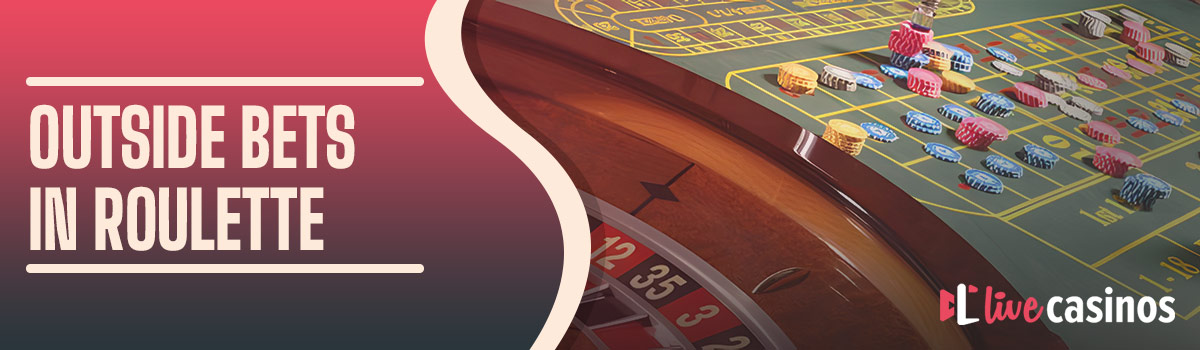
Every color, parity, and range bet is mathematically equivalent on the same table. The three dozens are equivalent to one another, as are the three columns. A sound outside-bet plan begins with the rule set and the amount wagered per spin.
- Choose the wheel first. A single-zero game cuts the standard house edge from 5.26% to 2.70% compared with double-zero roulette.
- Look for favorable even-money rules. La Partage returns half the stake when zero wins. En Prison holds the stake for another spin under the table’s stated rules. Either can produce a 1.35% edge under standard French conditions.
- Select the result profile. Even-money bets hit more often and have lower per-unit variance. Dozens and columns hit less often and return two units of profit when successful.
- Keep the stake fixed. A progression changes the size and timing of exposure. It leaves the probability and expected return of each wager unchanged.
- Set the budget and spin count before play. More spins create more total action, which raises the expected dollar cost even when the percentage edge stays fixed.
Our La Partage and En Prison comparison explains how both rules resolve zero. Availability and repeat-zero treatment can vary, so check the rules inside the chosen table.
What happens when outside bets are combined?
Multiple chips can increase the number of spins that produce some return. They also increase total action and create overlaps. The examples below use a single-zero wheel and $10 on each named position.
| Combination |
Total action |
Possible net results |
Expected result per spin |
| $10 on red |
$10 |
+$10 on 18 pockets; -$10 on 19 |
-$0.27 |
| $10 red + $10 odd |
$20 |
+$20 on 10 pockets; $0 on 16; -$20 on 11 |
-$0.54 |
| $10 on two dozens |
$20 |
+$10 on 24 pockets; -$20 on 13 |
-$0.54 |
| $10 on all three dozens |
$30 |
$0 on numbers 1-36; -$30 on zero |
-$0.81 |
| $10 red + $10 black |
$20 |
$0 on numbers 1-36; -$20 on zero |
-$0.54 |
Betting two dozens produces a winning spin on 24 of 37 pockets, or 64.86%. The remaining 13 pockets lose twice the stake placed on one position. The higher hit rate describes how the return is distributed; the expected loss remains 2.70% of the $20 total action.
Covering all three dozens or both colors creates 36 break-even numbers and concentrates the full loss on zero. The casino edge remains present because zero is uncovered. Adding positions can change volatility and the frequency of winning, losing, or break-even spins, but the wheel does not forget the total amount placed.
Outside bets versus inside bets
Outside bets cover 12 or 18 numbers, so they win more often and pay 1:1 or 2:1. Inside bets cover one to six numbers and offer larger payouts with wider short-run swings. On a standard single-zero wheel, both groups carry the same 2.70% house edge per dollar wagered.
The main American exception is the five-number top-line bet on 0, 00, 1, 2, and 3. It pays 6:1 and carries a 7.89% edge. The six-number line pays 5:1 and retains the usual 5.26% double-zero edge.
Pros and cons of roulette outside bets
| Pros |
Cons |
| Simple chip positions and result tracking |
Every standard option still loses on zero |
| Even-money bets have the highest single-bet hit rate |
Higher hit rate does not create positive expected value |
| Choice between lower-variance 1:1 bets and higher-variance 2:1 bets |
Combining positions can hide how much is wagered each spin |
| La Partage or En Prison can reduce the edge on six even-money options |
Dozens and columns receive no benefit from those rules |
Roulette outside bets FAQ
What counts as an outside bet in roulette?
Red, black, odd, even, low, high, the three dozens, and the three columns are the standard outside bets. They cover groups of 12 or 18 numbers.
Are red and black really 50-50?
No. Each color wins on 18 of 37 pockets in single-zero roulette, or 48.65%. It wins on 18 of 38 in double-zero roulette, or 47.37%. Green pockets lose for both colors under standard rules.
Which outside bet has the best odds?
The six even-money bets share the highest hit rate. Every option within that group has identical odds. Table selection makes the stronger mathematical difference: single zero beats double zero, and La Partage or En Prison improves qualifying even-money bets.
Are dozens and columns outside bets?
Yes. Each covers 12 numbers and pays 2:1. Dozens group consecutive ranges, while columns group numbers by their vertical position on the layout.
Can covering several outside bets remove the house edge?
No. Extra positions change the set of winning, losing, and break-even results while increasing total action. Zero or double zero preserves the casino advantage.
Do outside bets have a lower house edge than inside bets?
Most regular bets on the same standard wheel share one house edge. Outside bets win more frequently and pay less, which changes variance. French rules can lower the edge on even-money outside bets, while the American top-line inside bet carries an unusually high edge.
Verdict
Outside bets provide a clear choice between frequent 1:1 outcomes and less frequent 2:1 results. None of the matching colors, parities, ranges, dozens, or columns has a hidden advantage. The most useful strategy is to choose the lowest-edge available rules, keep the stake controlled, and count every chip toward total action.
The live roulette strategy guide covers broader play decisions. Readers comparing staking systems can use the roulette betting systems guide, while the mathematical roulette strategy analysis explains expected value and session risk in greater depth.


























 Roulette
 Blackjack
 Baccarat
 Poker
Poker
 Sic Bo
 Dragon Tiger
 Game Shows
  Top 5 Games
  See more
  Roulette Casinos
  Low Limit
  High Limit / VIP
  Exclusive
  How to Play
  Basic Strategy
  Top Tips
  FAQ
FAQ  Blackjack Casinos
  Baccarat Casinos
  Bonuses
  Poker Casinos
  Game Providers
  Sic Bo Casinos
  Dragon Tiger Casinos
  Credit and Debit Card
  e-Wallet
  Cryptocurrency
  Bank and Checks
  Pay by Phone and SMS
  See more
  How-To Guides
  Top Lists
  In-Depth
  Strategy
  Casino & Games
  Insight
  News
News  Promotions
 Guide to Live Casinos
  Top 10 Live Casino Tips
  Studio Locations
  FAQ & Help
  Meet The Dealers
  Our Awards
  How We Rate
  Responsible Gambling


 ENG
ENG 






 Zero Sits Outside Every Standard Group
 Facebook
 Pinterest
 Twitter
 LinkedIn
 Copy Link