Access to a high-limit table and permission to fund an account are separate matters. A table can be visible while a player-specific control prevents the advertised maximum. A casino can also request identity, affordability, occupation, source-of-funds, or source-of-wealth information under its licence and risk procedures.
These checks do not follow one worldwide balance formula. Requirements differ by jurisdiction, operator, risk assessment, account history, and activity. For British licensees, Gambling Commission guidance on high-value customer programmes says checks should cover affordability, safer gambling, and enhanced due diligence, including current evidence about identity, occupation, and source of funds. That does not mean every country or casino uses the same trigger or asks for the same documents.
What a casino may check before high-limit access
- Identity and age: whether the account holder has been verified through reliable information or documents.
- Location and market eligibility: whether the game and its limits are permitted where the player is located.
- Affordability and safer-gambling risk: whether the level or pattern of spend raises concerns under the operator’s rules.
- Source of funds or wealth: where the money used for play came from, when a risk-based check is required.
- Account history: deposits, withdrawals, previous verification, self-exclusion, limits, and unusual activity.
- Table availability: whether access is public, tied to status, approved for a private room, or scheduled in advance.
A VIP contact may coordinate a request, explain documents, or arrange a private session. Compliance and safer-gambling decisions should remain separate from sales or rewards. Never split transactions, use another person’s account, or misstate the source of money to avoid a check. If support cannot explain why access or a withdrawal is delayed, use the casino’s complaint procedure and the regulator or dispute body named in its terms.
Table limits, cashier limits, and account limits
The game maximum controls what can be placed on the roulette layout. Deposit and withdrawal limits control movement through the cashier. Account-level wager, loss, or time controls can restrict play across several games. A maximum-payout term can sit at game, casino, daily, or other settlement level. These values should be reviewed together before a player assumes the table’s headline maximum is usable.
| Layer |
Controls |
Where to verify |
| Game |
Minimum, bet-category maximum, total round maximum, payout calculation |
Live table rules and wager confirmation |
| Casino |
Eligibility, account status, overall payout terms, player controls |
Account limits, casino terms, and support |
| Cashier |
Deposit, withdrawal, payment-method, currency, and verification limits |
Cashier page and payment terms |
| Player |
Personal money, time, and loss boundaries |
Pre-session plan and responsible-gambling tools |
Withdrawal speed deserves a separate check. A high game limit does not guarantee that a win can be withdrawn in one transaction or on the same day. Verification, payment-method caps, pending periods, security review, and casino withdrawal terms can affect the process. Review those rules before depositing.
Calculate total action before judging the stake
The chip placed on one spin is only the first number. A session’s expected cost depends on total action, which is the sum of every wager. A simple planning estimate is:
Total action = average stake per spin × completed spins
Theoretical loss = total action × house edge
Assume a player averages $1,000 per spin and completes 40 spins. Total action is $40,000. At a standard single-zero table, multiplying by 1/37 gives a theoretical loss of about $1,081.08. At a standard double-zero table, multiplying by 2/38 gives about $2,105.26. On an eligible even-money bet with La Partage, multiplying by 1/74 gives about $540.54.
| Example |
Total action |
Single-zero theoretical loss |
Double-zero theoretical loss |
| $100 × 40 spins |
$4,000 |
About $108.11 |
About $210.53 |
| $1,000 × 40 spins |
$40,000 |
About $1,081.08 |
About $2,105.26 |
| $10,000 × 40 spins |
$400,000 |
About $10,810.81 |
About $21,052.63 |
These figures describe mathematical averages across repeated play. One 40-spin session can finish far above or below them. A sequence of losing spins can consume a preset loss limit long before 40 rounds. A winning sequence does not remove the cost built into future action. The calculation is useful because it makes stake size, pace, wheel choice, and session length visible in one place.
How higher stakes affect wins and losses
Roulette does not become more predictable when the stake increases. Recent results remain independent of the next fair spin. A dealer, VIP status, or private room cannot make a number due. Betting systems change the sequence of stakes and the path of short-run results, while the underlying probabilities and payouts remain in force. The mathematical roulette strategy guide explains expected value and compares betting systems.
Outside bets win more often than a straight-up number because they cover more pockets. Their standard payout is smaller. On the same standard single-zero wheel, red and a straight-up number both carry a 2.70% house edge. Red produces more frequent one-unit outcomes. A straight-up number produces many full-stake losses and an occasional 35:1 win. Neither bet type receives a mathematical upgrade from a larger stake.
Spreading chips can smooth the appearance of results by covering more numbers, yet it also raises total action when the chips are added rather than moved. A player placing $500 on each of 20 numbers has risked $10,000 on the spin. Looking only at the $500 chip hides 95% of the action.
Build the session around a loss boundary
A bankroll is money reserved for gambling. Affordability depends on whether losing that money would affect other commitments. The full session loss must come from discretionary funds after bills, savings, debt payments, and other commitments. The casino’s maximum can sit far above a sensible personal amount.
Before opening the table, write down four limits:
- Session loss limit: the maximum cash amount that can be lost without a top-up.
- Stake limit: the most that can be placed on one spin across the entire layout.
- Time or spin limit: the first endpoint that closes the session.
- No-chase rule: stakes do not rise in response to a loss, and a reached limit does not reset after a deposit or temporary win.
Use the casino’s deposit, loss, wager, and time controls where available. Set them before funding the session. Stop when the first chosen boundary is reached, regardless of the result. If limits become difficult to follow, gambling starts affecting essential money, or play continues mainly to recover a loss, leave the table and use the support and self-exclusion options on our responsible gambling page.
High-stakes roulette table checklist
| Check |
Pass condition |
Warning sign |
| Wheel and paytable |
Zero pockets, payouts, and special rules are clear |
The lobby markets RTP without a complete rule panel |
| Bet limits |
Inside, outside, per-position, and total caps are stated |
One headline maximum is the only figure shown |
| Payout ceiling |
Profit versus total-return wording is unambiguous |
Support cannot explain how the ceiling applies |
| Access and checks |
Eligibility and requested documents have a clear process |
A sales contact promises to bypass verification |
| Cashier |
Deposit, withdrawal, currency, and fee terms are known |
The game maximum greatly exceeds usable cashier limits without explanation |
| Player controls |
Loss, stake, and time limits are set before play |
The plan depends on winning back a loss |
Compare the complete set of rules rather than chasing the largest published number. A lower maximum on a single-zero table with clear terms may fit the task better than a larger maximum attached to a double-zero wheel, a vague payout ceiling, or unsuitable cashier rules.
Is high-stakes live roulette worth it?
High-limit play can offer a private setting, fewer seats, or access to a table that accommodates a larger entertainment budget. It supplies no mathematical advantage by itself. The value is personal and should be judged against the exact rules, cost, access process, and risk of the session.
A player who needs the high maximum to make roulette feel meaningful may be placing too much weight on stake size. The same game can be observed or played at a lower amount. Choosing a lower limit reduces the cash value of each swing while preserving the core live-dealer format.
High-stakes live roulette FAQ
What amount counts as high stakes in roulette?
There is no universal dollar threshold. Treat a table as high stakes when its limits are materially above the standard range in the same casino lobby or expose an unusually large share of the player’s discretionary gambling budget.
What is the largest roulette bet online, and do VIP tables share the same limits?
There is no permanent worldwide maximum. The usable amount depends on the exact table, casino configuration, currency, market, bet category, payout ceiling, account controls, and current access. The same VIP branding can appear at casinos with different limits. Check the live rules before each session and after changing casino, table, currency, device, or location. Obtain written support confirmation for any unclear limit.
Do higher stakes or outside bets improve roulette odds or RTP?
Stake size does not change the probability of a winning pocket or the applicable house edge. Outside bets cover more pockets and win more often than straight-up bets, but a losing spin can still remove the full stake. Regular inside and outside bets on the same standard wheel generally have the same house edge. A special rule such as La Partage can improve the RTP of eligible even-money bets when the game rules confirm it.
Can a VIP manager negotiate a higher roulette limit?
A private or high-limit request may be reviewed in some casinos, but approval is never guaranteed. Compliance, safer-gambling, provider, game, market, and risk controls can still block or cap the request. Use the table panel and written casino confirmation as the final evidence.
Why did the game reject a wager below the advertised maximum?
The headline figure may apply to a different bet category. The wager can also exceed a per-position, aggregate, total-round, payout, balance, account, currency, or market limit. Read the rejection message and full rules before changing the bet.
Will high-limit access require source-of-funds checks?
It can. The trigger and documents depend on the operator, jurisdiction, risk assessment, and activity. There is no universal balance multiple that guarantees access. Provide accurate information through the casino’s official process and do not attempt to route around a check.
Verdict
High-stakes roulette is a limit and exposure decision. Start with the exact table panel: wheel, paytable, inside and outside caps, total wager maximum, payout ceiling, currency, and access rules. Then compare those values with the cashier terms and the player’s precommitted loss, stake, and time limits.
The largest maximum is rarely the most useful comparison point. A clear single-zero table, an affordable session plan, and enforceable account controls provide better decision information. For broad playing decisions, continue to the live roulette strategy guide.

























 Roulette
 Blackjack
 Baccarat
 Poker
 Sic Bo
 Dragon Tiger
 Game Shows
 Top 5 Games
 See more
 Roulette Casinos
 Low Limit
 High Limit / VIP
 Exclusive
 How to Play
 Basic Strategy
 Top Tips
 FAQ
 Blackjack Casinos
 Baccarat Casinos
 Bonuses
 Poker Casinos
 Game Providers
 Sic Bo Casinos
 Dragon Tiger Casinos
 Credit and Debit Card
 e-Wallet
 Cryptocurrency
 Bank and Checks
 Pay by Phone and SMS
 See more
 How-To Guides
 Top Lists
 In-Depth
 Strategy
 Casino & Games
 Insight
 News
 Promotions

 Guide to Live Casinos
 Top 10 Live Casino Tips
 Studio Locations
 FAQ & Help
 Meet The Dealers
 Our Awards
 How We Rate
 Responsible Gambling


 ENG






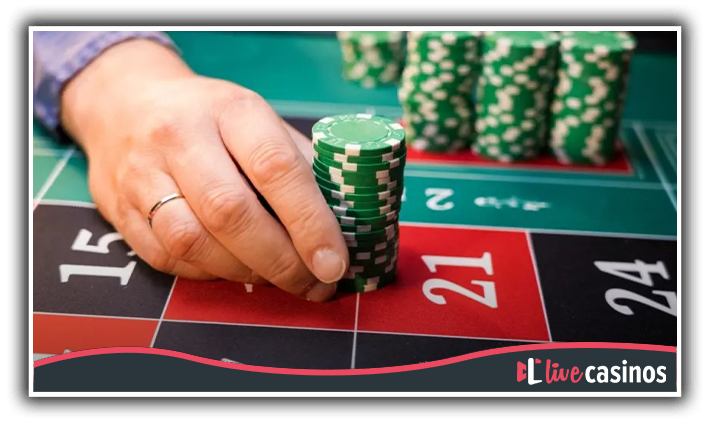

 Limits are table-specific
 Facebook
 Pinterest
 Twitter
 LinkedIn
 Copy Link