No betting progression can give roulette a positive expected value. The strongest mathematical approach starts with the wheel and its zero rules: a single-zero table is cheaper to play than a double-zero table, and La Partage cuts the house edge on even-money bets where it is available.
Systems such as Martingale, Paroli, D’Alembert, Fibonacci, and Oscar’s Grind change the timing and size of your stakes. That can produce very different short-session results. The probability of the ball landing on red, black, or any selected number stays fixed.
Choose the lowest verified house-edge rules first. Use fixed units and a defined session budget to control exposure. Every progression is a risk pattern and cannot beat the wheel.
Table of Contents
Table of Contents
How roulette odds work
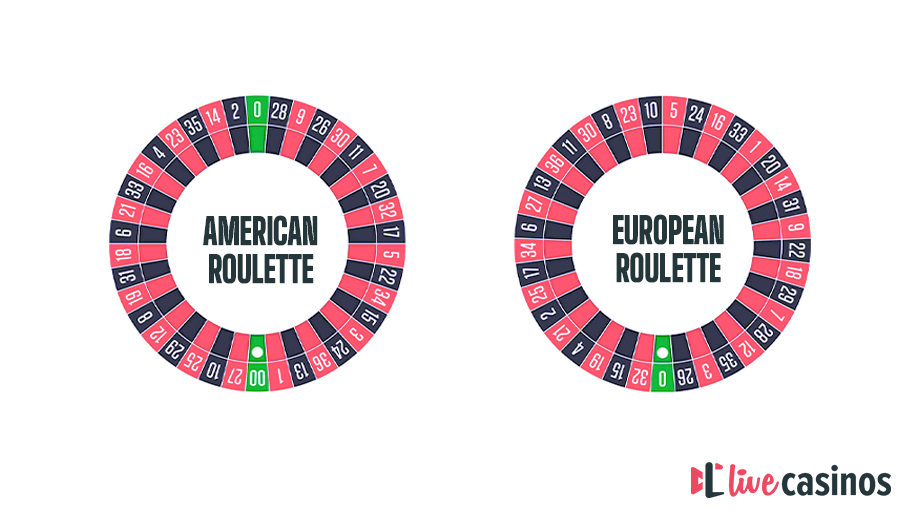
Roulette odds begin with the number of pockets on the wheel. Standard European roulette has 37 pockets: numbers 1 to 36 and one zero. Standard American roulette has 38 because it adds 00.
The zero pockets create the house advantage. A $1 red bet on a European wheel wins $1 on 18 results and loses $1 on 19 results:
EV = (18/37 × $1) + (19/37 × −$1) = −$0.0270
The expected loss is about 2.70 cents per dollar wagered. The standard European house edge is 1/37, or about 2.70%, producing a 97.30% theoretical return to player. On standard American double-zero bets, the edge is 2/38, or about 5.26%. That figure is close to twice the single-zero edge, though it is not exactly double.
The illustration of European and American roulette wheelsEuropean roulette has one zero pocket. American roulette adds 00, increasing the house edge on standard bets.
Under the standard payout schedule, most bets on the same wheel carry the same house edge even though their hit rates and payouts differ. A Split covers twice as many numbers as a Straight Up bet, while the payout falls from 35:1 to 17:1. The major American exception is the five-number bet covering 0, 00, 1, 2, and 3. It pays 6:1 and carries a 7.89% house edge.
Bet
Numbers covered
Payout
European hit rate
European RTP
American hit rate
American RTP
Straight Up
1
35:1
2.70%
97.30%
2.63%
94.74%
Split
2
17:1
5.41%
97.30%
5.26%
94.74%
Street
3
11:1
8.11%
97.30%
7.89%
94.74%
Corner
4
8:1
10.81%
97.30%
10.53%
94.74%
Six Line
6
5:1
16.22%
97.30%
15.79%
94.74%
Dozen or Column
12
2:1
32.43%
97.30%
31.58%
94.74%
Red/Black, Even/Odd, Low/High
18
1:1
48.65%
97.30%
47.37%
94.74%
First Five (American only)
5
6:1
N/A
N/A
13.16%
92.11%
American five-number exception: The First Five bet has a 7.89% house edge, compared with 5.26% on standard double-zero bets.
A bet with a higher hit rate can feel steadier without offering a higher return. On the same standard wheel, an 18-number red bet and a one-number Straight Up bet have very different variance, yet each dollar wagered carries the same house edge.
What makes a strategy mathematical
A mathematical roulette strategy uses fixed rules that can be written, calculated, and tested. Calling a progression mathematical does not show that it has a positive expectation. It simply makes the staking pattern measurable.
Expected value: the probability-weighted average net result of a wager over repeated trials. House edge expresses the casino’s expected gain as a share of the amount wagered. On a standard European table, a $100 total wager produces an expected player loss of about $2.70.
Variance: a measure of how widely results spread around their expected value. Straight Up bets create wider swings than even-money bets because wins arrive less often and pay more.
Risk of ruin: the probability that the bankroll reaches zero or becomes too small to place the next required stake. For a progression, this also includes the chance of hitting the table maximum before completing the sequence.
Total action: the sum of all stakes placed during a session. Expected loss depends on total action, so a progression that raises stakes can increase the amount exposed to the house edge.
Every spin is independent. Previous reds, blacks, wins, and losses do not change the probability of the next result. A progression can pair larger stakes with certain parts of a random sequence, creating a different bankroll path. It cannot modify the wheel.
Popular math-based betting systems
System
Progression
Main exposure
Martingale
Double after a loss
Exponential stakes during losing runs
Paroli
Double after a win, usually for up to three wins
A loss can erase the current progression
D’Alembert
Add one unit after a loss, subtract one after a win
Large cumulative exposure during long losing periods
Fibonacci
Move forward after a loss and back two places after a win
The sequence grows quickly when losses continue
Oscar’s Grind
Hold after a loss and add one unit after a win within a cycle
Cycles can become long and require larger stakes
Martingale: basic negative progression
The Martingale is built for even-money bets. After each loss, the next stake doubles. A win resets the sequence to the base unit. If the player can place every required bet, a win after a finite losing run recovers the preceding sequence losses and leaves one base-unit profit.
The phrase if the player can place every required bet carries the whole risk. Stakes grow exponentially. Starting from $5, seven consecutive losses consume $635, and the next required wager is $640.
Consecutive loss
Stake
Cumulative loss
Probability from the start
1
$5
$5
51.35%
2
$10
$15
26.37%
3
$20
$35
13.54%
4
$40
$75
6.95%
5
$80
$155
3.57%
6
$160
$315
1.83%
7
$320
$635
0.94%
On a European even-money bet, the probability of losing one spin is 19/37, or about 51.35%. The probability that the first n spins all lose is (19/37)n. The chance of encountering a run somewhere inside a longer session is higher than the final column above. A Martingale failure rate cannot be reduced to roulette’s 2.70% house edge; bankroll, base unit, table maximum, and session length all matter.
Progression rules
Use an even-money bet such as red/black, odd/even, or low/high.
Double the stake after every loss.
Reset to the base unit after a win.
End the progression when the next wager exceeds the bankroll or table maximum.
Pros
Cons
Simple progression rules.
A recovery win can close a manageable sequence with one base-unit profit.
Stakes grow exponentially.
Bankroll and table limits can stop the sequence before a recovery win.
The expected value remains negative.
Reverse Martingale (Paroli): streak progression
Paroli reverses the direction of Martingale. The stake doubles after a win and resets after a loss or after a chosen number of consecutive wins, commonly three. The progression places its largest bet after earlier wins, which limits the size of a sequence that begins with a loss.
That structure does not make a winning streak more likely. With a $5 base unit, three wins produce stakes of $5, $10, and $20 for a $35 sequence profit. Two wins followed by a loss produce +$5 +$10 −$20, leaving a $5 sequence loss.
Progression rules
Begin with one base unit on an even-money bet.
Double the next stake after a win.
Reset after a loss.
Reset after three consecutive wins or another limit chosen before play.
Pros
Cons
The sequence resets quickly after a loss.
A preset win cap keeps the progression finite.
A late loss can erase the earlier gains in the sequence.
Winning runs cannot be predicted.
The house edge remains unchanged.
D’Alembert: linear negative progression
D’Alembert adds one unit after a loss and removes one unit after a win. The growth is linear, so the required stakes rise much more slowly than Martingale. The underlying idea that wins and losses should soon balance is a version of the gambler’s fallacy. Independent roulette results have no mechanism that forces a correction inside a player’s session.
If a player starts at one unit and loses four times, the stakes are 1, 2, 3, and 4 units, with ten units lost in total. A win on the next five-unit stake recovers five units and reduces the following wager to four. Several more wins may be needed to close the deficit.
Progression rules
Start with one unit on an even-money bet.
Add one unit after a loss.
Subtract one unit after a win.
Keep the stake at one unit when another subtraction would take it below the base.
Pros
Cons
Stake growth is linear and easy to track.
Individual jumps are smaller than Martingale jumps.
Losses can accumulate faster than later wins recover them.
The system assumes a short-run balance that roulette does not promise.
Total action can grow during a long session.
Fibonacci: sequence growth
The Fibonacci system uses the sequence 1, 1, 2, 3, 5, 8, 13, 21, 34, and 55. After a loss, the next stake moves one place forward. After a win, it moves back two places. The progression grows more slowly than Martingale and faster than D’Alembert once a losing run extends.
The mathematical name can make the system sound more powerful than its mechanics. The sequence controls stake size. It has no relationship with the ball, wheel, or probability of the next color.
Progression rules
Begin at the second 1 in the Fibonacci sequence.
Move forward one number after a loss.
Move back two numbers after a win.
Return to the starting unit when a win would move the sequence below 1.
Set a final sequence position before play so the required stake has a hard ceiling.
Pros
Cons
The sequence is fixed and auditable.
Stake increases are initially gradual.
Later stakes become large during an extended losing run.
Recovery can require several favorable results.
The progression cannot improve RTP.
Oscar’s Grind divides play into cycles that seek one unit of profit. The player keeps the same stake after a loss and adds one unit after a win, without betting more than the amount required to complete the cycle. Once the cycle reaches its one-unit target, the stake and cycle result reset.
The bet size can still rise when a cycle contains repeated losses and intermittent wins. A completed cycle may earn one unit, while an unfinished cycle can carry a much larger deficit.
Progression rules
Start a new cycle with a target of one unit.
Repeat the same stake after a loss.
Add one unit to the next stake after a win.
Never wager more than the amount needed to finish the cycle one unit ahead.
Reset after reaching the cycle target.
Pros
Cons
The target for each completed cycle is clearly defined.
Stake growth follows a linear rule.
A difficult cycle can become long and expensive.
One-unit wins can sit beside much larger unfinished losses.
The per-dollar house edge remains in place.
Simulation method and results
The chart below shows one reproducible 100-spin illustration using Martingale, Paroli, D’Alembert, and Oscar’s Grind. Each system receives the same sequence of red wins and losses. The result demonstrates how stake timing can send bankrolls along very different paths.
Simulation methodology
Wheel: standard European single-zero roulette, with no La Partage or En Prison.
Bet: red on every spin, giving 18 winning pockets and 19 losing pockets.
Starting bankroll: 100 units.
Base unit: 1 unit.
Table maximum: 64 units.
Runs: one 100-spin path applied to all four systems.
Random generator: Python Mersenne Twister with seed 42.
Stop condition: the session ends when the next required stake exceeds the remaining bankroll or table maximum. The chart keeps the stopped bankroll flat so the point of failure remains visible.
One seeded 100-spin illustration. A different spin sequence can change the order and final result of every system.
The sequence contains 50 red wins and 50 losses. Martingale finishes with 53 units after the next required stake exceeds the available bankroll. Paroli finishes with 120, D’Alembert with 140, and Oscar’s Grind with 119.
These final values do not rank the systems. Each progression places different stakes at different times and creates a different amount of total action. Another valid seed could reverse every result. A single path illustrates variance; it cannot estimate the bankroll a player is likely to have after 100 spins.
Over enough wagering, each dollar placed on this standard European red bet carries an expected loss of 2.70 cents. Stopping while ahead secures the result of that session. It has no effect on the expected value of a future independent spin.
The practical mathematical approach
The wheel rules make a larger mathematical difference than the choice between progressions. Start by checking the zero pockets and special rules in the table information panel.
Where available, choose a single-zero table with La Partage for even-money bets. When zero lands, half of an eligible losing stake is returned, reducing the house edge from about 2.70% to 1.35%. The chance of red, black, odd, even, low, or high landing remains 18/37.
Use flat stakes to keep exposure visible
Flat betting uses the same stake each round. It does not improve RTP, though it makes the round cost and remaining bankroll easier to follow. Progressions can hide how quickly total action is rising because the next stake depends on the previous result.
Inside and outside bets can be chosen by preferred variance. Outside bets hit more often and pay less. Inside bets hit less often and pay more. On a standard payout schedule, that choice changes the rhythm of results while leaving the house edge unchanged.
Bankroll management and responsible gambling
A simple framework is to divide the session bankroll into 50 to 100 units, making the base stake 1% to 2% of the amount set aside for that session. Decide the maximum total loss, final spin, and largest permitted stake before play begins.
Set a stop-loss: end the session when losses reach the amount chosen in advance.
Set a win limit: walking away preserves the current session profit without changing future odds.
Avoid loss-chasing: a larger wager after a loss carries the same house edge and puts more money at risk.
Check the table maximum: progression examples that assume unlimited stakes cannot be used on a real table.
Count the full amount wagered: spreading chips across several positions increases total action even when the table shows one spin.
One seeded 100-spin illustration showing how four roulette staking systems produced different bankroll paths.
Roulette should be treated as paid entertainment. The session bankroll should consist only of money you can afford to lose. Our live casino money management guide covers practical spending controls, while the responsible gambling page lists further support.
Players can use fixed rules for bet selection, stake size, and bankroll limits. These choices change variance and session exposure. They cannot remove the house edge or guarantee a profit.
How do you calculate roulette probability?
Divide the number of winning pockets covered by the total number of pockets. A European Corner bet covers four numbers, so its probability is 4/37, or 10.81%. The same bet on an American wheel is 4/38, or 10.53%.
What is mathematically the best roulette strategy?
The lowest expected-loss approach is to choose the lowest verified house-edge rules. A standard single-zero wheel carries about a 2.70% edge on standard bets. La Partage reduces the edge on eligible even-money bets to about 1.35%. A staking progression cannot increase the probability that the ball lands on the selected numbers.
Is roulette 100% luck?
The result of a fair roulette spin is random from the player’s perspective, and the player cannot control the pocket. Decisions about wheel type, La Partage, stake size, and session limits can change cost and risk. They do not determine the winning number.
Conclusion and key takeaways
Roulette mathematics gives a clear hierarchy. La Partage on a single-zero even-money bet carries a 1.35% house edge. Standard single-zero bets carry 2.70%. Standard double-zero bets carry 5.26%, and the American First Five bet rises to 7.89%.
Martingale, Paroli, D’Alembert, Fibonacci, and Oscar’s Grind arrange stakes in different sequences. They can create sharply different short-term bankroll paths, as the 100-spin illustration shows. Each dollar wagered remains subject to the edge of the selected table and bet.
Choose favorable rules, keep the unit size visible, and set the loss limit before the first spin. If you want to compare available games after understanding the math, visit our live roulette tables page.
Luka has been writing content for various sites and publications for the better part of a decade, which includes both iGaming and topics related to video games and technology. This experience gives him a unique perspective on what live casino games are, what they can be, and how they’ve grown and changed over the years. His love of gaming also ensures an in-depth understanding of most games you’re likely to find in a live casino lobby, and he enjoys discussing strategies and the maths and statistics that make these games tick.
You’ll be the first to know about our latest offers, exclusive bonuses, tips and promotions. Well, you know what to do...
If you subscribe you confirm you are 18+ and you accept to receive marketing material. To see how we may use your information, take a look at our Privacy Policy.
LiveCasinos.com Cookies
To make your experience using LiveCasinos better, our site uses cookies. By continuing to use this website, you agree to our use of cookies, which is further described in our Cookie Policy.

























 Roulette
 Blackjack
 Baccarat
 Poker
Poker
 Sic Bo
 Dragon Tiger
 Game Shows
  Top 5 Games
  See more
  Roulette Casinos
  Low Limit
  High Limit / VIP
  Exclusive
  How to Play
  Basic Strategy
  Top Tips
  FAQ
FAQ  Blackjack Casinos
  Baccarat Casinos
  Bonuses
  Poker Casinos
  Game Providers
  Sic Bo Casinos
  Dragon Tiger Casinos
  Credit and Debit Card
  e-Wallet
  Cryptocurrency
  Bank and Checks
  Pay by Phone and SMS
  See more
  How-To Guides
  Top Lists
  In-Depth
  Strategy
  Casino & Games
  Insight
  News
News  Promotions
 Guide to Live Casinos
  Top 10 Live Casino Tips
  Studio Locations
  FAQ & Help
  Meet The Dealers
  Our Awards
  How We Rate
  Responsible Gambling


 ENG
ENG 







 Minimize the house edge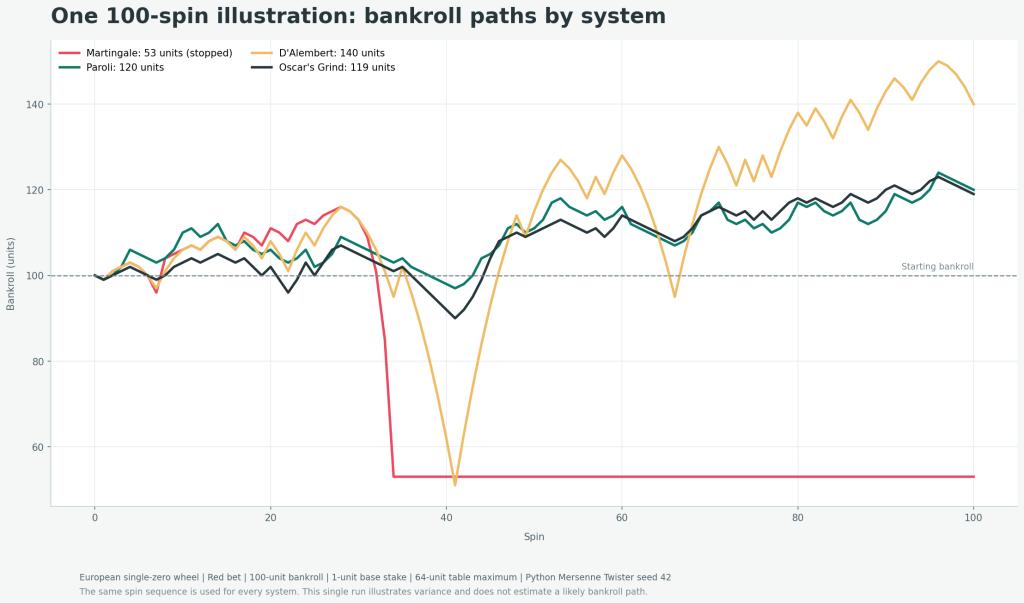
 Facebook
 Pinterest
 Twitter
 LinkedIn
 Copy Link