















High-Stakes Live Casino Bankroll Strategy: Managing Variance, Risk and Control
High-stakes live casino strategy must contain stable money management, acceptance of session fluctuations, and not letting psychological or mathematical risk play too big a role while playing live dealer games at high stakes.
Expert insight — richard marcus
“The core mechanics haven’t changed. Live dealer tables follow the same rules, the same pacing, and the same mathematical structure as the ones I spent decades playing. What does change is the environment. You’re not standing at a table reading people or managing pressure in real time. You’re behind a screen, which affects how you make decisions. That shift in behavior is where most of the difference comes from.”
How High Stakes Amplify Variance Beyond Simple Loss Exposure
First off, there’s more betting volatility. Variance at high stakes often leads to large win-loss swings in a short period of time that can not only increase risk but also have an emotional effect, causing the high-stakes player to forego discipline and even go on tilt, which ultimately brings on a higher risk of ruin.
Variance is nothing more than fluctuation in how betting results stay and deviate from expected probability. But its effects are completely different at higher bet levels because the direct effect on bankroll is much more tangible. To understand that effect, say you’re playing blackjack at $5 per hand with a total session bankroll of $1,000. If you suffer an extreme negative variance and lose 10 hands in a row, the effect of that variance is only a 5% reduction of your bankroll. Now, looking at that same variance with the same $1,000 bankroll, but you’re playing much higher stakes at $100 per hand, you have now gone broke and hit the element of ruin, which simply means you cannot recover from that negative variance since you have no more money left to bet with. Calculating the risk of ruin is important.
The table below illustrates how these dynamics shift as stakes increase.
Factor
Low Stakes
High Stakes
Why It Matters
Variance impact
Moderate
Extreme
Single sessions can define outcomes
Bankroll swings
Manageable
Severe
Risk of ruin becomes real
Emotional pressure
Low
High
Decision quality degrades under pressure
Risk of ruin
Lower
Significantly higher
Structural bankroll discipline required
Live dealer pacing
Consistent
Heightened effect
Slower play amplifies each decision
How Variance Compounds Differently at High-Limit Live Tables
High limit means quicker-faster, no matter which way the variance goes. When it goes south, the losses may seem to compound faster even when you’re not doubling up losing bets. How players manage their session bankroll within their total bankroll plays a major role here, but the key to success is to try and keep your positive and negative variances within the same monetary distance from the midway point either way it goes.
Why Short Sessions Still Produce Extreme Swings
Length of session by itself does not produce extreme swings. What does is the ratio between bet-size and session bankroll, and how that increases or decreases during the course of a session. If that ratio is high, then the space between positive and negative swings will of course be greater. When it’s low, the variance can be wide but the swings will be less dramatic.

The difference isn’t variance itself, but how quickly it hits your bankroll. At higher stakes, the same losing streak can end a session before you have time to adjust.
Bankroll Management for High-Stakes Live Tables: What Standard Advice Gets Wrong
Standard advice on bankroll management for high-stakes tables generally centers around reducing risk of ruin or keeping it at a minimum. This is good advice but it does not consider taking advantage of positive streaks. If a high-stakes gambler is too focused on protection against risk of ruin, he may be reducing session wins by a significant amount when the cards and dice are going his way.
You should begin with a total bankroll, which is the total amount of money you have set aside for a long-term gambling experience. Then you divide that total bankroll into a number of short-term sessions at the tables and you arrive at the figure for your session bankroll. So, if you have a total bankroll of $1,000 and you decide to play ten sessions, your session bankroll is $100, as long as each session has the same importance to you. You should begin with a total bankroll, which is the total amount of money you have set aside for a long-term gambling experience. Then you divide that total bankroll into a number of short-term sessions at the tables and you arrive at the figure for your session bankroll. So, if you have a total bankroll of $1,000 and you decide to play ten sessions, your session bankroll is $100, as long as each session has the same importance to you.
Why Standard Bankroll Rules Break Down at High Limits
The main reason is that standard bankroll rules do not take into account the emotional strain put on high-limit players, especially when they’re losing. So, when players go on tilt, those standard bankroll rules are going to be broken as virtually no gambler can maintain the discipline required to remain within the confines of any bankroll or gambling management system.
Separating Session Bankroll from Total Exposure
Player strategy usually covers the totality of play from the beginning to end of the entire length of play. However, when a player has an unusual session ending with a big win or loss, he often decides to restructure that strategy to ride out a perceived wave of good or bad luck, thus he deviates one or multiple session-bankrolls from the normal bankroll management structure for those sessions, which would not be intrinsic to the total exposure of the entire gambling period — a distinction that sits at the heart of solid bankroll management for high-stakes play.
How Bankroll Structure Changes at High-Stakes Live Tables
Bankroll structure at high-limit can change one of two ways, that being go more conservative or aggressive. It depends on the player. It’s easy to assume that at high-stakes play, bankroll structure takes on a more conservative change, but this is not etched in stone. A lot of high-stakes live dealer players with lots of gamble in them will go for the kill when they begin winning hands. The risk tolerance in their gambling goes up and they bet a bigger percentage of their total bankroll each hand, thus you have a live dealer bankroll-management change that goes against the grain.
Why Stop-Loss Discipline Matters More at Live Tables
While playing at live tables, you have stop and go access much more than when playing at land-based casinos, which can induce more impulsive gambling. If you lose a significant amount at a land-based casino and then leave, then have a sudden urge to go back and gamble, you must make a trip back to the casino, which allows more time for second thoughts. But when you lose that money at a live table and make the same decision to go back to that table, you’re already back at the table with a touch of a key, so room for second thoughts is drastically diminished. So, a strong stop-loss discipline protects you from over-impulsive gambling.
When Emotion Overrides the Mathematics at High-Stakes Tables
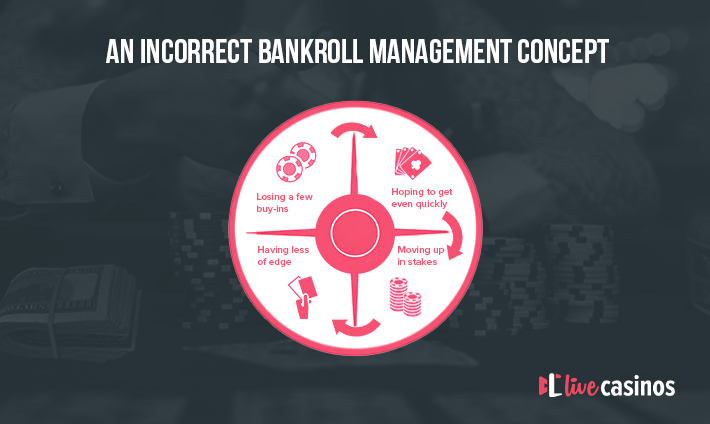
Common bankroll mistakes at high stakes often stem from chasing losses, moving up limits too quickly, and overestimating short-term recovery.
Controlling your emotions while gambling is one of the major psychological questions in a domain highly influenced by psychology. Millions upon millions of gamblers worldwide put mathematics to work in deciding almost every facet of their approach to casino gambling, everything from bankroll management to bet-size to handplay. But then the losses come into play, emotions take over, and psychological loss-chasing sets in. And when it does, it does so thoroughly and causes gamblers in the throes of a losing streak to play mental games with themselves. They do this simply to alter the reality that has set in, whereby gamblers devise all kinds of betting systems by which they can get their money back, either quickly or in elongated fashion. This is the worst of high-stakes gambling risk and can also have devastating short or long-term effects on the psyche.
This is where players begin to lose control, and you start to see what really changes at higher stakes.
How the Live Dealer Environment Amplifies Emotional Decision-Making
The environment at live dealer casinos can increase emotional decision-making at high-stakes tables mainly due to its pace. The interruptions at land-based casino tables, such as servers approaching the tables to take drink orders, or spouses, friends and acquaintances approaching to talk with players, are not a factor (unless the chat boxes are at full throttle), therefore live dealer pacing is not affected. That difference leaves players more alone with their emotional thoughts which is conducive to enhanced emotional decision-making during play. It is important to note that emotions generally have a negative effect on positive play.
Why Chasing Losses Is More Dangerous at Live Tables Than Anywhere Else
Chasing losses is more dangerous at live tables than land-based casinos simply because it happens quicker, and the decision to do so is more abrupt. Players tend to be more consumed with the gambling at live tables, so everything associated with that happens more distinctly. Actually, less thought goes into the process of beginning the chase to recuperate the money lost. It’s more instinctual, perhaps only topped by Random Number Generator (RNG) games which outpace all other forms of casino gaming.
What makes players chase losses?
Chasing losses is driven by the emotional impact of losing and the urge to recover quickly.
How Game Selection Reshapes Your Risk Profile at High Limits
Game selection directly impacts risk exposure, with faster-paced games like baccarat increasing volatility compared to blackjack.
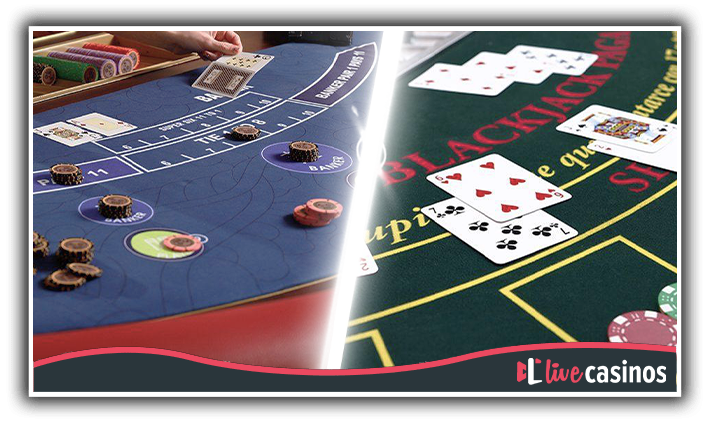
The game that immediately comes to mind is baccarat, as it is the high-limits game of choice. The odds of baccarat are basically the same as in blackjack, without taking into account advantage play. But what stands out with live baccarat tables is the speed of the game, most noticeable at non-squeeze games where players do not touch the cards. There is no handplay decision-making by the players, contrary to blackjack, so the hands go bang-bang out of the card shoe and up to 100 hands can be played in an hour. Add to that the volatility of streaks that occur in baccarat, and you have a churning bowl of high-limit risk to contend with. Players looking for high-stakes live casino tables that accommodate this level of play will find the options vary considerably.”
Risk of ruin, simply the threat of losing your entire gambling bankroll, is a very pertinent element at all levels of gambling. It can be played conservatively or aggressively, the former by betting a low percentage of your total bankroll each hand, the latter by betting a high percentage of that bankroll each hand, where you’d face the risk of ruin much quicker than had you chosen the conservative approach. So, doubling your losing bet not only doubles your risk of ruin but also changes the entire dynamic of any session’s reality, meaning you’re probably forced to change your betting strategy on the spot if you want to avoid the risk of going broke.
The volatility in live blackjack is less since the players do not have the choice of betting with or against the house as they do in baccarat. However, both games include high-risk tolerance gambling. In blackjack, that risk scales slower as fewer hands are dealt per hour, unless, of course, there are very few players at the table. Also note that baccarat table minimum-bets are generally higher than at blackjack tables, so this also creates more volatility, even though the casino house-edge is very similar at both games.
Comparing Volatility Profiles Across Live Dealer Formats
High-stakes gambling risk will always be greater at whichever type casino formats to speed and facilitation of betting, both of which lead to more action in less time which equals increased volatility. Random Number Generator (RNG) games will always offer the fastest speed, which make them the highest high-stakes gambling risk. It’s hard to say which is the faster format between land-based and live dealer casinos, but with either, time is the predominant factor in the determination of risk. Time dictates the speed at which all casino gambling happens, which at optimum levels amplify hands per hour, volatility, and virtually every other facet of gambling at the tables.
Knowing When High-Stakes Play Stops Being Strategic
High-stakes responsible gambling stops being strategic when bad high-roller habits and risk tolerance gambling increase. These occurrences are emotionally driven, almost always when players are in the midst of losing streaks. They steam, go on tilt, and let their emotions get the best of them, which rarely has a positive outcome. They accept more risk tolerance and adopt the usual bad habits that deter positive bankroll management and heighten their risk of ruin probability.
When the Size of the Bet Changes the Nature of the Decision
Increases and decreases in bet-size have a proportionate effect on risk and expected value, but not really during the hand in play at the moment of the bet change but rather when the gambling session has ended. Result: expected value has become zero or close to it because of bet-change decisions made while the player was losing self-control under negative pressure. So, the final outcome is a series of bad decisions that cause losing sessions, deflated bankrolls, and in some cases, ruin itself.
Recognizing Warning Signs Before They Become Problems
High-stakes players trying to practice responsible gambling may actually have trouble recognizing the warning signs that they are no longer gambling responsibly. This happens when the players are suffering such emotional upheaval that they’re unable to process anything besides the mathematics of how much they’ve won or lost, usually in a short period of time. In order to recognize warning signs before disaster strikes, players need to take breaks during their gambling sessions to evaluate what is actually happening to them besides the amount of money they’re up or down.
Richard Marcus is widely regarded as one of the greatest professional casino cheats of all time. Over a 25-year career, he developed and executed a range of highly effective cheating techniques, including the famous Savannah Roulette Move.
In a remarkable career shift, Richard now serves as a top Game Protection Consultant and trainer, working with casinos worldwide to safeguard their operations. His expertise has been featured in independent media outlets including ABC Radio (Australia) History Channel, NBC Today, as well as industry publications such as CDC Gaming Reports and Casino Life Magazine. He has also shared his expertise at several prestigious Game Protection Conferences, such as the Usenix, WGPC, G2E, and the Aces Gaming Summit in Singapore.
You’ll be the first to know about our latest offers, exclusive bonuses, tips and promotions. Well, you know what to do...
If you subscribe you confirm you are 18+ and you accept to receive marketing material. To see how we may use your information, take a look at our Privacy Policy.
LiveCasinos.com Cookies
To make your experience using LiveCasinos better, our site uses cookies. By continuing to use this website, you agree to our use of cookies, which is further described in our Cookie Policy.