Once you have chosen how to play the main hand, account for every optional wager. Gravity Blackjack offers Perfect Pairs, 21+3, Lucky Ladies, and Dealer Bust. Each uses a separate stake, and each can lose while the main hand wins.
What Each Side Bet Depends On
| Side bet |
Qualifying information |
What to check |
| Perfect Pairs |
The player’s first two cards |
The mixed, colored, and perfect-pair payout tiers. |
| 21+3 |
The player’s first two cards plus the dealer’s upcard |
The listed three-card poker combinations. |
| Lucky Ladies |
The player’s first two cards |
The qualifying queen and two-card 20 categories. |
| Dealer Bust |
The dealer’s completed bust hand |
How the number of cards affects the payout. |
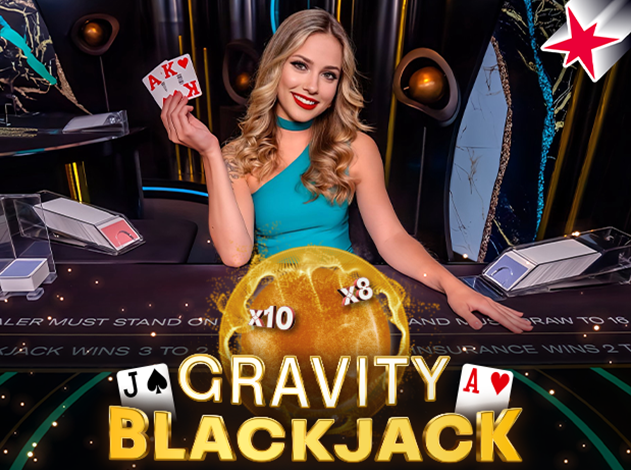
The game can assign a multiplier to a side bet after betting closes. A highlighted bet still needs a qualifying result. Multipliers cannot be used as a reliable signal for the next round, and chasing a particular combination can lead to more wagering than originally planned.
Check each side bet’s own RTP and paytable. A headline RTP for the main game does not describe a round with money spread across several different wagers. Our Gravity Blackjack payout and RTP review separates the published figures and explains their source limitations.
Calculate the Full Stake Before You Play
With a €10 main bet, adding four €1 side bets brings the opening stake to €14. The side bets increase the amount committed by 40%. Any later double or split requires more money.
| Opening wagers |
Total stake |
Increase over the main bet alone |
| €10 main bet |
€10 |
0% |
| €10 main bet + one €1 side bet |
€11 |
10% |
| €10 main bet + four €1 side bets |
€14 |
40% |
The next examples use that same €14 opening stake, with no doubles or splits. Total returned includes any winning stake. The net result deducts every wager placed in the round.
| Example result |
Total returned |
Net result |
| Main hand wins 1:1; all four side bets lose |
€20 |
+€6 |
| Natural blackjack wins 3:2; all four side bets lose |
€25 |
+€11 |
| Main hand pushes; all four side bets lose |
€10 |
−€4 |
| Main hand loses; one €1 side bet pays 5:1; other side bets lose |
€6 |
−€8 |
The last row explains why a winning animation can accompany an overall loss. A 5:1 payout on €1 returns €6, while the other €13 of stakes has lost. These are arithmetic examples of possible settlement, with no prediction about how frequently the results occur.
Set Limits Before the Betting Window Opens
Choose a spending limit you can afford to lose and a time limit before joining. Include any planned side bets and the extra stake required for a permitted double or split. If the next decision would take you beyond the limit, stop committing more money.
A fixed opening stake makes the cost easier to track. Increasing stakes to recover a loss can rapidly change that cost. Starting at €5, six doubled losing stakes of €5, €10, €20, €40, €80, and €160 lose €315; the next proposed stake is €320. Side bets and blackjack decisions can add further exposure.
Take a break if you start treating the next hand as a way to repair the previous one. The spending controls and support information on our responsible gambling page are available if keeping to limits becomes difficult.
Common Gravity Blackjack Strategy Mistakes
- Using a chart with the wrong dealer rule. Standing on soft 17 and hitting soft 17 produce different recommendations.
- Treating every 16 alike. A pair of eights and a hard 10,6 hand require different checks.
- Counting a side bet win as the round’s profit. Deduct the main stake and all losing side bets.
- Assuming a multiplier guarantees a payout. The selected side bet still has to qualify.
- Doubling or splitting without checking settlement. An unchecked dealer blackjack can change the value of committing extra stakes.
- Increasing stakes because a result feels due. The recent display does not establish a dependable forecast for the next multiplier.
Gravity Blackjack Strategy FAQ
What is the best strategy for Gravity Blackjack?
Use basic strategy matched to the table rules for the main hand, keep optional side bet stakes within a separate limit, and check dealer-blackjack settlement before using the double and split recommendations. No strategy guarantees a profit.
Do Gravity multipliers change the main-hand payout?
The multiplier feature applies to qualifying side bet wins. It does not increase the ordinary payout on the main blackjack hand. Follow the hand rules when deciding whether to hit, stand, double, or split.
Should I always double 11 in Gravity Blackjack?
No. In the standing-on-soft-17 reference used here, hard 11 is doubled against 2 to 9 and hit against an ace. The decision against a ten-value card depends on dealer-blackjack checking and settlement.
Should I always split a pair of eights?
The decision against a ten-value card or ace depends on the settlement rules. Splitting is the reference play after dealer blackjack has been ruled out; hitting is the reference play when an unchecked blackjack would collect all added stakes.
Are all four side bets required?
No. Perfect Pairs, 21+3, Lucky Ladies, and Dealer Bust are optional. Each selected side bet adds its own stake to the round, and its result is settled according to its separate paytable.
Can Martingale make Gravity Blackjack profitable?
A progression increases the stake needed after losses without changing the payout rules. A losing sequence can reach a spending limit or table maximum before recovery. It offers no guaranteed route to profit.
Verdict
A useful Gravity Blackjack routine is simple enough to repeat: check the rules, identify the hand, choose the matching action, and keep the whole stake within a set limit. The cases against a ten-value card or ace deserve particular attention because dealer-blackjack settlement can change a double or split decision.
Keep side bets optional and their cost visible. The multiplier feature adds another possible payout, along with another reason to lose track of the amount wagered. For the broader principles behind these decisions, continue with our live blackjack strategy guide.


























 Roulette
 Blackjack
 Baccarat
 Poker
Poker
 Sic Bo
 Dragon Tiger
 Game Shows
  Top 5 Games
  See more
  Roulette Casinos
  Low Limit
  High Limit / VIP
  Exclusive
  How to Play
  Basic Strategy
  Top Tips
  FAQ
FAQ  Blackjack Casinos
  Baccarat Casinos
  Bonuses
  Poker Casinos
  Game Providers
  Sic Bo Casinos
  Dragon Tiger Casinos
  Credit and Debit Card
  e-Wallet
  Cryptocurrency
  Bank and Checks
  Pay by Phone and SMS
  See more
  How-To Guides
  Top Lists
  In-Depth
  Strategy
  Casino & Games
  Insight
  News
News  Promotions
 Guide to Live Casinos
  Top 10 Live Casino Tips
  Studio Locations
  FAQ & Help
  Meet The Dealers
  Our Awards
  How We Rate
  Responsible Gambling


 ENG
ENG 






 Check the Rule Behind the Button
 Facebook
 Pinterest
 Twitter
 LinkedIn
 Copy Link