






















 Roulette
 Blackjack
 Baccarat
 Poker
Poker
 Sic Bo
 Dragon Tiger
 Game Shows
  Top 5 Games
  See more
  Roulette Casinos
  Low Limit
  High Limit / VIP
  Exclusive
  How to Play
  Basic Strategy
  Top Tips
  FAQ
FAQ  Blackjack Casinos
  Baccarat Casinos
  Bonuses
  Poker Casinos
  Game Providers
  Sic Bo Casinos
  Dragon Tiger Casinos
  Credit and Debit Card
  e-Wallet
  Cryptocurrency
  Bank and Checks
  Pay by Phone and SMS
  See more
  How-To Guides
  Top Lists
  In-Depth
  Strategy
  Casino & Games
  Insight
  News
News  Promotions
 Guide to Live Casinos
  Top 10 Live Casino Tips
  Studio Locations
  FAQ & Help
  Meet The Dealers
  Our Awards
  How We Rate
  Responsible Gambling


 ENG
ENG 


Editorial director | 200+ reviews published, 10+ years in iGaming industry
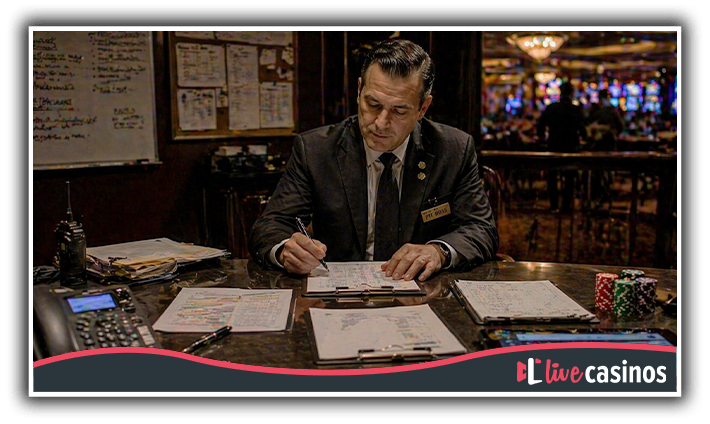
A casino pit boss, sometimes called a pit manager or gaming supervisor, is the person responsible for overseeing table games within a defined section of a casino floor. They supervise dealers, monitor player behavior, enforce rules, approve comps and credit, and make final decisions when disputes arise. On the floor, this is the highest level of authority players deal with directly.
The role exists because decisions at a table cannot wait. A disputed payout, a dealer mistake, or unusual player behavior all need to be handled immediately while the game continues. Dealers cannot resolve these situations while doing their job, and senior management is not positioned to react in real time. The pit boss steps in, makes the call, and keeps the game going. When it comes to live casino games this is critical, because even a small mistake can break the flow and cause additional issues.
What makes the position demanding is not any single responsibility, but how they overlap. A pit boss monitors several tables at once with different games and tempo, with different players, and involving different amounts of money. It is important that decisions are made quickly and without hesitation.
The term “pit” comes from older casino layouts where table games were grouped together in a lowered area. The layout has changed over time, but the structure behind it remains. The person assigned to that section is responsible for everything that happens there, from routine dealer rotation to disputes that involve significant amounts of money.
What is a Casino Pit Boss?
While the role is clear at a surface level, its position within the casino structure explains how decisions are actually made.
In the casino hierarchy, pit boss is between floor managers and gaming managers. Floor supervisors handle a small number of tables and report upward, while the pit boss oversees multiple supervisors and carries broader authority over decisions.
In modern casinos, the role combines direct observation with system-based tracking. Player activity, betting patterns, and table performance are monitored continuously, with the pit boss responsible for interpreting that information and acting on it when necessary.
Pit Boss vs. Floor Supervisor: Understanding the Difference
The difference between these roles becomes clearer when you look at how responsibility is divided on the floor. While both operate close to the tables, their authority and scope are not the same.
The Casino Hierarchy: Where the Pit Boss Sits
The casino floor operates within a clear chain of responsibility. Each role has a defined scope, and if needed, each of them can escalate the matter upward.
- Dealer
Runs the game, handles cards or spins, and follows established procedures at the table. - Box Person (craps-specific)
Assists at craps tables by tracking bets, verifying payouts, and supporting game flow. - Floor Supervisor
Monitors a small group of tables, usually four to six, and manages immediate dealer and player interactions. Reports directly to the pit boss. - Pit Boss / Pit Manager
Oversees multiple supervisors across a larger section of the floor. Holds authority over comps, credit approvals, and dispute resolution, and is accountable for the performance of that area. - Shift Manager
Supervises the entire casino floor during a shift, coordinating pit bosses and handling escalations. - Gaming Manager or Director of Table Games
Sets operational policies and oversees all table game activity across the property.
What Does a Casino Pit Boss Do Every Day?
The role makes more sense when you look at what happens during a live shift. A typical shift starts with a quick check of the floor. Table limits, dealer assignments, chip levels, open credits, and notes from the previous shift all need to be reviewed before the tables pick up pace.
With games already in progress, issues appear immediately. A payout is questioned at one table, a player asks for a comp, and surveillance flags something worth a closer look. These situations happen at the same time, and the pit boss deals with them as they arise.
What matters is not handling each situation in isolation, but keeping the entire section under control while those situations overlap. The pit boss decides when to step in, when to let a supervisor handle it, and when a situation needs to move beyond the table. That constant adjustment is what defines the role from one moment to the next.
Supervising Table Games and Dealers
One of the core parts of the job is making sure table games are run correctly at all times. Small mistakes at the table level do not stay small for long. They can escalate quickly if they are not handled immediately.
A pit boss watches how dealers handle cards, chips, and player interaction. This is not only about whether the rules are followed, but how the game feels at the table. A well-run game moves at a steady pace, stays consistent in its procedure, and does not disrupt the rhythm of the game.
Dealer rotation is also part of that control. Moving a dealer is usually a practical decision based on pace, accuracy, and the state at the particular table. Regular rotation also helps keep dealers alert and consistent over long shifts. Tired dealers can make mistakes. At a blackjack table, for example, even small variations in dealing speed or attention can change how players react over time.
There is also a steady administrative side to the role. Pit bosses approve chip fills when a table runs low, authorize credits, and adjust staffing based on demand. These actions happen alongside everything else, not separately. Keeping the tables running cleanly depends on handling these details without slowing the game down.
Monitoring Players and Detecting Cheating
Watching dealers is only part of the job. A pit boss also watches how players behave at the table, and that requires a different kind of attention. This can show up in small ways. A player changes bet size sharply from one round to the next. Someone pauses longer than expected before making a decision. Two players exchange repeated signals across the table. These details do not prove anything on their own, but they can point to a pattern that needs a closer look. At a blackjack table, one of the most common examples is bet spreading, where a player increases stakes when the count becomes more favorable. Card counting is not illegal, but casinos are not required to allow it.
The same logic applies to collusion and chip dumping. A pit boss is reading both sides of the table at the same time. If a dealer makes an unusual move, it is noted. If a player benefits from repeated irregular situations, that is also noted. Situations like these are why players often question whether live dealers can cheat at online casinos, especially when outcomes seem difficult to explain in the moment.
None of this is handled alone. A casino pit boss works closely with surveillance and relies on support before taking action. Suspicion is followed by verification, and only then by a decision. Our expert Richard Marcus explained how casinos monitor high-stakes players, and the pit boss is only one part of a larger system that protects the floor. Experienced casino pit bosses often describe this as pattern recognition. The first signal is rarely obvious. It is usually a small inconsistency that repeats over time.
Casino Surveillance and Technology
Monitoring players leads directly into how surveillance supports those decisions on a larger scale. A pit boss works inside a system that can follow betting patterns, review footage, and flag irregular behavior beyond what is visible at the table. The old image of a watchful manager pacing between tables is still part of the role, but it no longer tells the whole story.
This level of control has developed over time. Earlier casino operations depended heavily on staff reading the floor, supported by basic camera coverage. Today, surveillance includes high-definition cameras, zoom capability, digital player tracking, and software that can flag patterns as they develop. This shift becomes clearer when you look at how casino security has evolved, because modern surveillance systems are built on both observation and data.
Technology, however, has not replaced judgment. It has changed the burden of proof. A pit boss still needs to recognize when a table feels wrong before a full review ever begins. That is especially true in cases involving sophisticated advantage play, where the issue may not look like obvious cheating at all. Techniques such as edge sorting in baccarat show how far beyond simple sleight of hand game protection has had to move.
On a modern floor, the pit boss reads the table in real time, but they also know when to lean on the systems behind them. That combination is one reason the role still matters even in casinos that are full of cameras, logs, and software alerts.
Managing Disputes and Guest Complaints
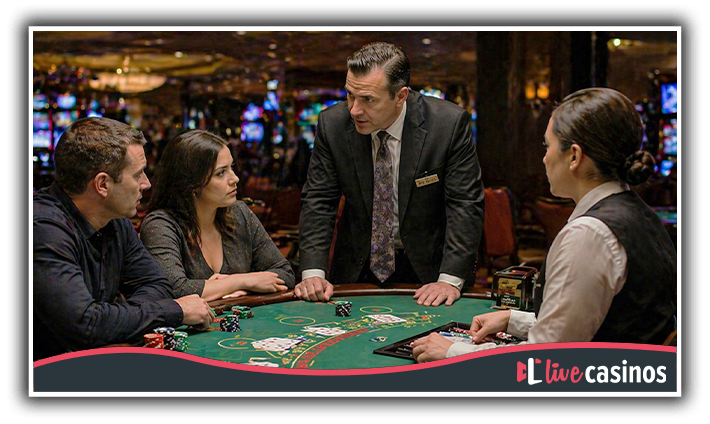
No matter how well a floor is run, disputes are part of the job. A player may believe a payout was incorrect. A hand can be read one way by the dealer and another way by the table. A missed step in procedure can raise questions about the result. These situations are routine, and a pit boss is judged by how they handle them when they happen.
Handling them requires both rule knowledge and control of the room. The pit boss needs to understand the game well enough to make a quick decision, and carry enough authority for that decision to be accepted. If the situation is straightforward, the answer comes immediately. If there is doubt, the outcome may depend on footage review or a decision above floor level. Any delay creates tension, and tension spreads quickly at a live table.
There is also a human side to these situations. When a player feels ignored, the situation escalates. When a player feels heard, even if the decision goes against them, it is more likely to settle. Experienced pit bosses manage this balance carefully, keeping control of the table without turning the situation into a confrontation.
What matters is holding the line without turning every complaint into a conflict. On a busy shift, that can be the difference between a single resolved issue and a floor that starts to lose control.
Handling Comps, Credits, and Player Rewards
Once gameplay is under control, attention shifts to how players are evaluated and retained. This part of the job looks generous from the outside, but it is highly calculated. Comps are not given because a player asks at the right moment or appears important. The decision is based on measurable value, including average bet, time at the table, buy-in size, playing history, and theoretical loss. In modern casinos, that information is tracked in real time, which makes the process far more precise than it once was.
The approach is not about being strict, but about being consistent. The pit boss needs to recognize which players bring long-term value, when a comp is justified, and when it should be refused. Meals, rooms, cashback, free play, transport, or access to a host may all be offered, but only when the numbers support it. This is also where relationships come into play, especially with regular and high-value players whose importance extends beyond a single high-stakes session. At high-limit tables, these decisions happen faster and carry more weight, because the value of keeping certain players active is significantly higher.
As a former pit boss described in Casino Confidential, comp offers after a significant win are often timed to keep the player engaged and at the tables. A comp is not only a reward, but a tool. That becomes easier to see when you look at what changes at a casino table when you bet $10,000, where the approach to high-stakes players shifts quickly once the amounts increase.
The same logic applies to credit and markers. In many casinos, these approvals pass through the pit, with systems verifying player details almost instantly. What used to take time can now be handled within moments, but the decision behind it still depends on judgment. The pit boss weighs value, risk, and context before approving any request.
There is also a psychological layer. Chips do not feel the same as cash in hand, and casinos have understood that for a long time. A pit boss watches how players react to wins, losses, and changing momentum during a session, adjusting the approach to keep the floor stable without interfering directly.




 What's the difference between land-based and online casino pit boss?
 Facebook
 Pinterest
 Twitter
 LinkedIn
 Copy Link