Our starting point is straightforward: a player should be able to understand the product before placing a bet. For an AI dealer game, that includes an explanation of the presenter as well as the gambling rules.
These are the questions we would use when assessing a specific title. They are our editorial criteria, rather than a claim that every jurisdiction imposes identical requirements.
- Is the dealer synthetic? The game should make this clear before a player bets. A realistic face and a human name can otherwise create a misleading impression.
- How is the result determined? The documentation should identify whether the game uses physical equipment, software-generated outcomes, or a combination.
- Which rules and payouts apply? Players should be able to find the paytable, betting limits, maximum payout restrictions, and relevant return or probability information.
- What has been tested? Any certification claim should identify what it covers. A general company badge does not explain the status of every game version.
- Who handles a disputed round? Players need access to their betting history, round identifiers, and an operator support process.
- What happens to chat data? If the host accepts messages or voice input, players should be able to understand how that information is used and retained.
Can an AI Dealer Change the Odds?
A change of presenter provides no basis for assuming a change in the odds. The rules and the system producing the result determine the relevant probabilities.
For example, if two games have identical outcome probabilities and payouts, replacing a human presenter with a digital character does not, by itself, change their mathematical return. A claim of better odds would need evidence of different rules or payouts.
It is also important to distinguish personalization of the presentation from changes to game results. A different voice or background does not establish that outcomes are being adjusted to an individual player.
For gambling covered by the British Gambling Commission’s technical standards, RTS 7 requires acceptably random outcomes and prohibits compensated behavior that changes outcome probabilities during play. That requirement should not be treated as evidence that an unidentified AI casino product has been tested or approved.
The Commission’s RTS 3 also requires accessible explanations of rules, payouts, and relevant information about the likelihood of winning. These are useful examples of the information players should expect to find. The applicable obligations depend on the market and product.
Our Position on AI Dealer Labels
We believe an AI dealer deserves a clear label wherever the product is described or recommended. Our proposed classification uses two separate descriptions: the presenter and the outcome mechanism.
- Human live dealer: a verified human presenter appearing through a live video feed.
- AI dealer: a synthetic presenter, with the outcome mechanism described separately.
- Automated physical game: a game using physical equipment without a human dealer, where that operation is documented.
- RNG game: a game whose results are generated by software, whether it includes a digital host or no host.
- Unconfirmed mechanism: the available evidence does not establish how outcomes are produced.
A product may need more than one description. An AI presenter and an RNG result system, for example, describe different parts of the same game.
Our position is that an AI presenter alone does not qualify a product for a human live dealer recommendation. Where the mechanism remains unconfirmed, we would state that gap instead of inferring an answer from the graphics or the product name.
This is an editorial position on how these products should be covered. It is not a statement that every casino lobby, regulator, or software provider uses the same terminology.
What We Still Need to Verify About KISS AI
A detailed review would require access to the current game and its supporting documentation. Our outstanding questions include:
- How does each table generate and record its results?
- Which game versions have been tested, by whom, and for which markets?
- What rules, RTP figures, betting limits, and payout caps apply to each version?
- How accurately does the host explain the rules and respond to unexpected questions?
- Which languages are available at the particular casino being reviewed?
- How do chat controls, mobile layouts, interrupted rounds, and support access work in practice?
Until those checks are complete, we would not give the product a testing score or describe its conversation quality, mobile performance, or fairness as independently verified.
Responsible Gambling
A friendly digital host can make a gambling session feel social. Its responses should never be treated as a reason to continue betting, increase a stake, or recover a loss.
We would expect a responsible implementation to avoid pressure to keep playing and to provide easy access to limits, breaks, and human support. These are expectations for product assessment, rather than claims about features we have tested in KISS.
Only gamble if you meet the legal age requirement where you live. Set a spending limit you can afford to lose, keep track of time, and stop when you reach your limit. If gambling is becoming difficult to control, use the operator’s blocking or self-exclusion tools and seek support from a gambling support service in your country.
Frequently Asked Questions
What is an AI casino dealer?
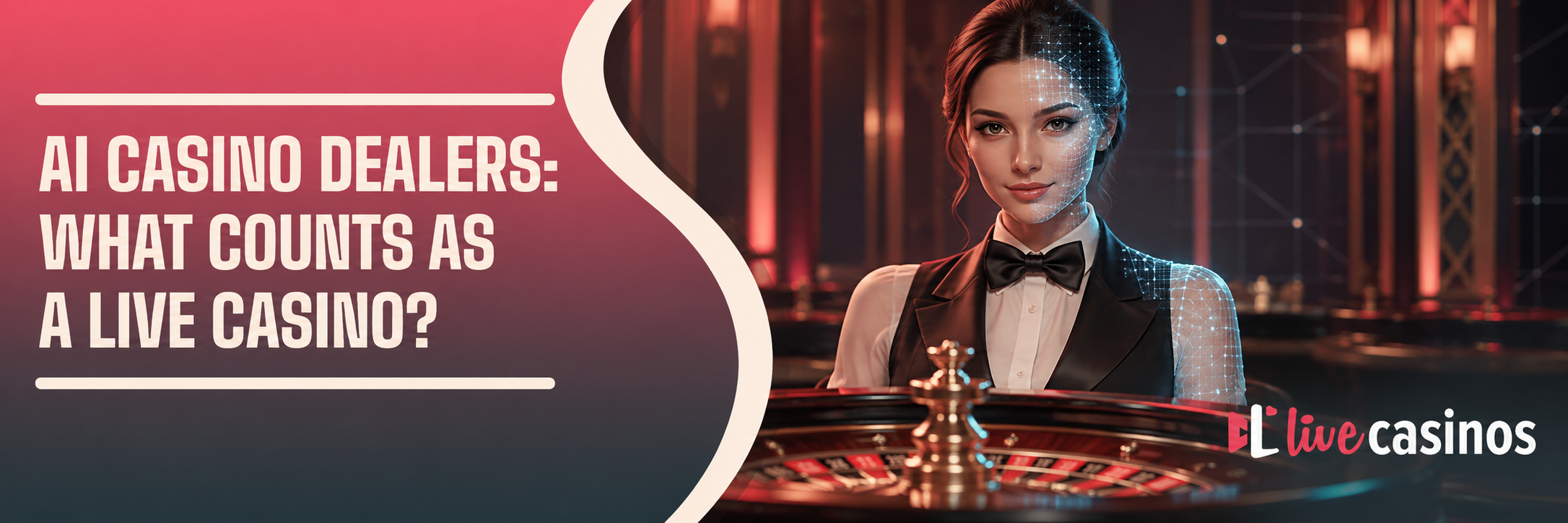
It is a synthetic presenter used in a casino game. Its appearance, speech, or responses may be generated by software. The term describes the host and does not, on its own, explain how the game determines winning results.
Is KISS AI the same as a human live dealer game?
KISS AI is promoted with AI-generated dealers. A synthetic presenter provides a different experience from interacting with a human dealer on camera. The underlying outcome system needs to be assessed separately for the particular game.
Does an AI dealer mean the game uses RNG?
No conclusion should be drawn from the presenter alone. Check the game rules and technical information to establish whether results come from software, physical equipment, or a combination. An unclear description should remain an open question.
Are AI casino games fair?
The presence of an AI host cannot establish fairness or unfairness. Assess the specific operator, rules, outcome system, and applicable testing. This article does not certify KISS AI or any other AI casino game.
Can an AI dealer help me win?
A host may explain rules, but a conversational response is not evidence of an ability to predict random results. Do not treat encouragement, a suggested number, or a personalized message as a betting advantage.
How will LiveCasinos describe AI dealer games?
Our editorial position is to identify synthetic presenters as AI dealers and describe the outcome mechanism separately. We would use a human live dealer label only where a real person’s live involvement has been established.
Verdict
AI dealers give casino operators another way to present games. For players, the value will depend on the quality of the interaction, the clarity of the rules, and whether the format offers the experience they actually want.
Our position is that the label must explain what the player is getting. Identify a synthetic host, document how the results are produced, and distinguish published claims from completed testing. A realistic presenter should never leave those questions harder to answer.

























 Roulette
 Blackjack
 Baccarat
 Poker
Poker
 Sic Bo
 Dragon Tiger
 Game Shows
  Top 5 Games
  See more
  Roulette Casinos
  Low Limit
  High Limit / VIP
  Exclusive
  How to Play
  Basic Strategy
  Top Tips
  FAQ
FAQ  Blackjack Casinos
  Baccarat Casinos
  Bonuses
  Poker Casinos
  Game Providers
  Sic Bo Casinos
  Dragon Tiger Casinos
  Credit and Debit Card
  e-Wallet
  Cryptocurrency
  Bank and Checks
  Pay by Phone and SMS
  See more
  How-To Guides
  Top Lists
  In-Depth
  Strategy
  Casino & Games
  Insight
  News
News  Promotions
 Guide to Live Casinos
  Top 10 Live Casino Tips
  Studio Locations
  FAQ & Help
  Meet The Dealers
  Our Awards
  How We Rate
  Responsible Gambling


 ENG
ENG 






 A Realistic Dealer Is Not Proof of Fairness
 Facebook
 Pinterest
 Twitter
 LinkedIn
 Copy Link