























 Roulette
 Blackjack
 Baccarat
 Poker
Poker
 Sic Bo
 Dragon Tiger
 Game Shows
  Top 5 Games
  See more
  Roulette Casinos
  Low Limit
  High Limit / VIP
  Exclusive
  How to Play
  Basic Strategy
  Top Tips
  FAQ
FAQ  Blackjack Casinos
  Baccarat Casinos
  Bonuses
  Poker Casinos
  Game Providers
  Sic Bo Casinos
  Dragon Tiger Casinos
  Credit and Debit Card
  e-Wallet
  Cryptocurrency
  Bank and Checks
  Pay by Phone and SMS
  See more
  How-To Guides
  Top Lists
  In-Depth
  Strategy
  Casino & Games
  Insight
  News
News  Promotions
 Guide to Live Casinos
  Top 10 Live Casino Tips
  Studio Locations
  FAQ & Help
  Meet The Dealers
  Our Awards
  How We Rate
  Responsible Gambling


 ENG
ENG 



For a long time, casino security was built around having multiple people being physically present and spotting cheaters and other problems in the lobby. Surveillance rooms were filled with screens and people trained to watch them, not because this approach was flawless, but because there was no alternative. Casino owners relied on humans to be well-trained, razor sharp indefinitelly, and having no ill intentions. Of course, history taught us that the system laid out in this manner can and will be exploited.
Experienced scammers and con artists managed to find a way to trick even the most experienced cogwheels in that system and exploit those weaknesses. Today, especially if we talk about high-stakes online casinos doesn’t rely on human judgment only.
The technological shift that reshaped modern online casinos was not introduced overnight. It was slowly introduced as a form of correction and an additional layer of protection. Over time, security stopped chasing people who were suspicious, and instead implemented a system that stopped incidents from happening at all.
This article will help you understand how modern casinos protect high-stakes play and what they no longer ask humans to do. They no longer ask surveillance teams to catch everything in real time. Instead, they rely on preset systems to document everything and analyze the patterns, so the person in charge can act on that cold, hard data.
RFID Card Tracking
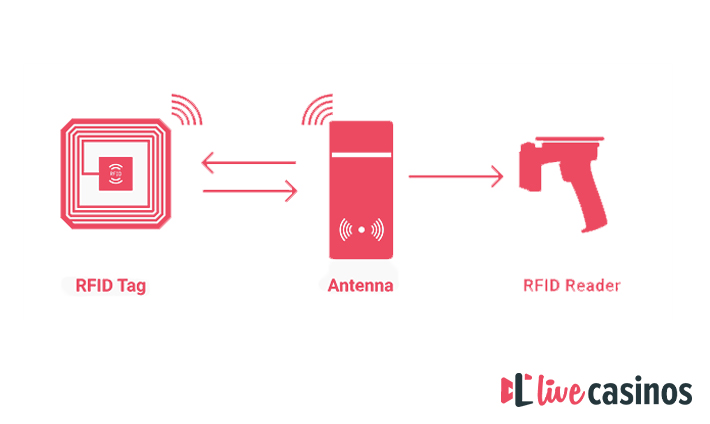
RFID stands for Radio Frequency Identification. This technology uses radio waves to automatically identify, track, and manage objects, animals, or people without requiring direct line-of-sight. It consists of a tag (chip) that stores data and a reader that scans it from a distance.
Before RFID entered the picture, a card was only visible in the moment it was dealt. Once it left the frame, it effectively vanished. Casinos reconstructed hands by memory, by partial footage, by inference.
RFID changed that completely. A card stopped being just a piece of printed cardboard and became a tagged object with a history. Each card could now be identified, time-stamped, and placed within a sequence that was independent from the round in which it was used.
Our expert, Richard Marcus, has long emphasized that most serious problems do not arise from dramatic, movie-like manipulation at the Texas Hold ’em table, but from pure uncertainty when questions are asked. When nobody can say with confidence what happened three hands ago, interpretation fills the gap. RFID completely collapses that. A system that knows which card left the shoe, when it appeared, and where it landed does not need interpretation to resolve questions later.
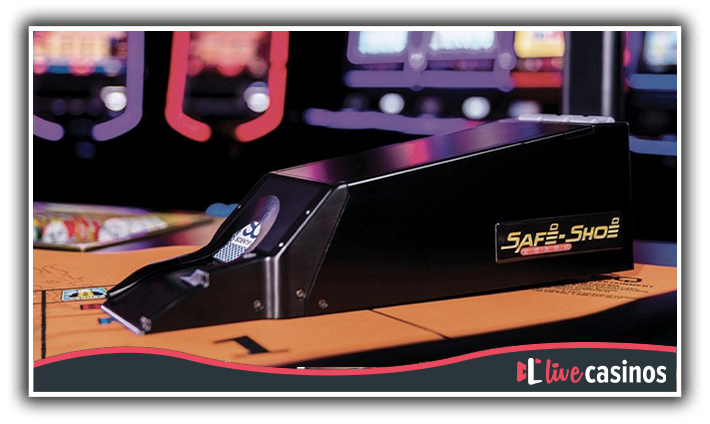
RFID tracking works simpler than you may think. Chips embedded in cards communicate with readers placed inside shoes or tables. A complete audit trail forms automatically, hand by hand, without anyone needing to intervene.
For honest players, nothing really changes. RFID is rarely visible, but its effects are. Cheating is almost impossible; everything runs more smoothly, and eventual disputes are solved quickly.
Automated Shuffle Machines
Shuffling was historically one of the weakest points of live casino games that cheaters tried to exploit, and casinos tried to protect. A critical part of most games was vulnerable to inside jobs, to players able to count cards, and everyone who could somehow know the sequence benefited heavily from that. However, even if the shuffler was acting in the best faith and never tried to compromise the game on purpose, they were still vulnerable.
Richard Marcus repeatedly returned to this point in his later work. It was never necessary for a dealer to be dishonest for a shuffle to become a vulnerability. Fatigue, habit, and subtle repetition were enough. When a process depends on someone doing the same physical action hundreds of times a day, a skilled observer can crack through the pattern.
Automated shuffle machines exist to remove that exposure completely. Cards are fed into a closed system that randomizes order mechanically, verifies completion electronically, and releases the deck only when the cycle has finished. There is no way to observe the process, and even if it were, there is no pattern to crack. This system is simply superior compared to human shuffling.
These machines weren’t invented because casinos stopped trusting dealers. They emerged because trust was never a reliable control mechanism in the first place. Removing the human shuffler closed one of the last doors through which scammers could crack the system. With automated shuffling, it is impossible, unless you can program the machine to shuffle cards in your favor, but that’s a whole different layer of security.





 Facebook
 Pinterest
 Twitter
 LinkedIn
 Copy Link