























 Roulette
 Blackjack
 Baccarat
 Poker
Poker
 Sic Bo
 Dragon Tiger
 Game Shows
  Top 5 Games
  See more
  Roulette Casinos
  Low Limit
  High Limit / VIP
  Exclusive
  How to Play
  Basic Strategy
  Top Tips
  FAQ
FAQ  Blackjack Casinos
  Baccarat Casinos
  Bonuses
  Poker Casinos
  Game Providers
  Sic Bo Casinos
  Dragon Tiger Casinos
  Credit and Debit Card
  e-Wallet
  Cryptocurrency
  Bank and Checks
  Pay by Phone and SMS
  See more
  How-To Guides
  Top Lists
  In-Depth
  Strategy
  Casino & Games
  Insight
  News
News  Promotions
 Guide to Live Casinos
  Top 10 Live Casino Tips
  Studio Locations
  FAQ & Help
  Meet The Dealers
  Our Awards
  How We Rate
  Responsible Gambling


 ENG
ENG 



When you play live casino games, you rarely see a complete picture. During some streams you can see the action on other tables, but in general, everything is focused on that one table and the game you are currently playing. At high-stakes online casinos you never see how busy it is behind the scenes.
Richard Marcus, our expert analyst and security consultant, argues that the most problems start with one person having too much to handle. Any system that allows a single individual to control everything without strict control will eventually be exploited. In land-based casinos, that control relied on supervisors, surveillance rooms, and procedure manuals. In live dealer studios, the same principle is implemented mostly through technology.
There is a huge difference between the systems which are created and managed by multiple people in strict hierarchy, where everyone works their part of the job, and systems that are not created and monitored properly. This article will show you how to recognize them easily.
From Sealed Pack to Shuffle to Table
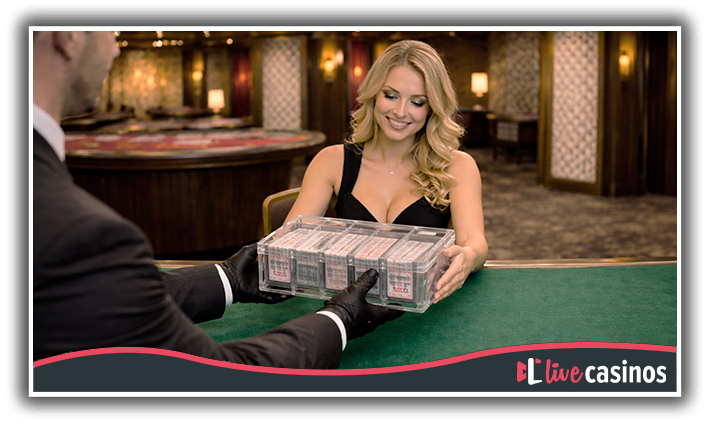
In a professional live dealer studio, the most important moments often happen before a dealer ever sits down at a table. The process of securing the cards begins long before a broadcast starts, and the early stages of the process are where serious operators separate themselves from casual ones.
Cards arrive at licensed studios in sealed packs supplied directly by approved manufacturers. These packs are not opened at the table. They are logged, stored, and handled under controlled conditions that limit who can touch them and when. In well-run studios, access to card storage is restricted, recorded, and subject to dual control, meaning no single person can manipulate the deck. This alone eliminates a wide range of historical risks that depended on unsupervised access.
Once cards are scheduled for use, the opening of sealed packs is itself a monitored procedure. Studios typically perform this step under surveillance, with multiple cameras recording the moment seals are broken and cards are verified.
One of the most important structural changes compared to land-based casinos is the separation of roles. Dedicated staff handle card preparation, while shuffle managers oversee the transition from sealed deck to active shoe. This division reflects a core lesson Marcus has emphasized repeatedly. When fewer hands touch critical elements, and when those hands are not the same ones resolving bets, opportunities for manipulation shrink dramatically.
Before cards ever reach a live table, they are typically loaded into RFID-enabled shoes or automated shuffling devices. This step is again visible on camera in professional studios. Players can see when a shoe is loaded, when a shuffle is completed, and when a new sequence begins.
Regulators have increasingly formalized these practices. Licensing bodies require documented card-handling procedures, recorded handovers, and clear audit trails. While exact standards vary by jurisdiction, the principle remains consistent. Card movement must be observable, logged, and reviewable after its done.



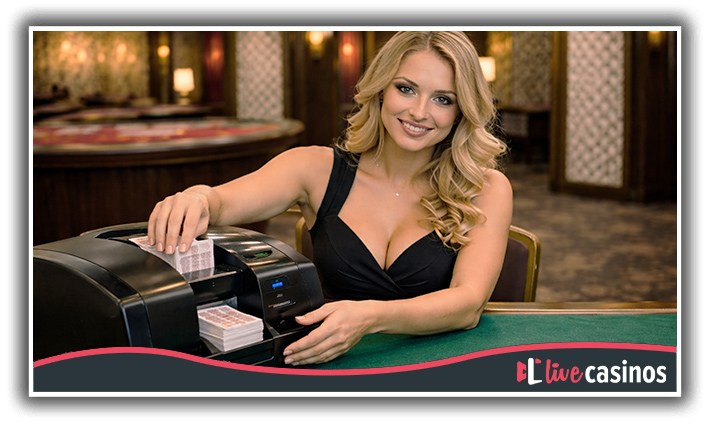

 Is the shuffle system bulletproof now?
 Facebook
 Pinterest
 Twitter
 LinkedIn
 Copy Link